Art workshop resource
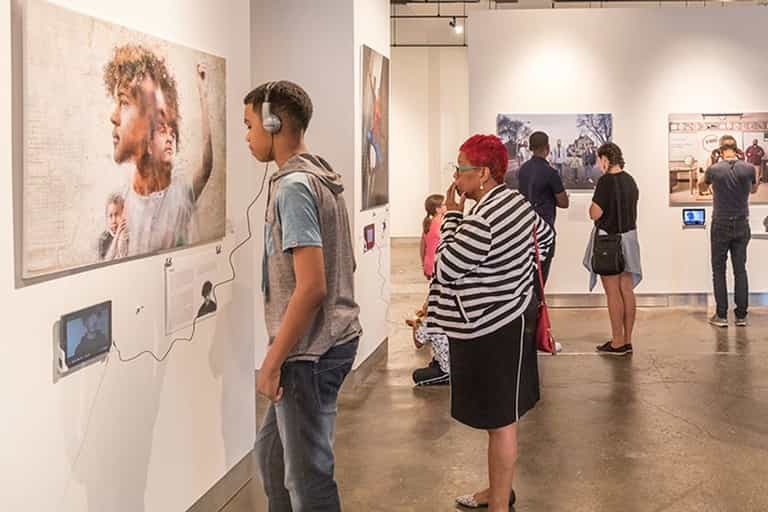
The rise of 'Slow Looking' in art
Mindfulness and the practice of looking at a painting, slowly.

By Bridget March|Artist
Sun, Oct 26, 2025|Edited: Wed, Sep 16, 2026
Have you heard of the global phenomenon of 'Slow Looking' that is gaining traction in art museums and galleries? This movement encourages individuals to slow down, take their time, observe closely, ask questions, become aware of their emotions, and reflect on their experiences. In a world saturated with images, we often find ourselves skimming, skipping, and scrolling, causing us to overlook so much. We flip through channels on TV, play games on our phones while watching shows, and text instead of engaging in meaningful conversations, reading body language, and truly understanding one another.
The Practice of Slow Looking
Slow Looking is a practice embraced daily by professionals in the creative arts. It distinguishes between casually snapping a quick photo of a picturesque bridge and taking the time to create a small sketch of it. An artist who dedicates time to sketch the bridge is immersed in its architecture, ornamentation, starting and ending points, and ponders its purpose, significance, and the identity of its designer. This artist has a vastly different experience compared to the phone photographer who moves on to the next 'sight' without contemplating the bridge again.
Mental Health Benefits
Understanding 'Slow Looking' reveals several mental health advantages. It can enhance concentration, foster a sense of 'flow' where time seems irrelevant, stimulate curiosity, develop observational skills, and promote overall well-being. Simply pausing to observe and question can provide a rewarding and enriching experience. In today's post-industrial world, many individuals have turned work ethic, time management, stress levels, and financial pursuits into virtues. Creatives, however, are driven differently and may help others slow down, experience flow, and cultivate a deeper sense of fulfillment.
Research suggests that engaging with art positively impacts our brains and emotions. The more time you spend looking at a piece, the more intriguing it becomes, heightening your awareness of how it affects you and enriching the overall experience. It has been said that a hallmark of great art is that the longer you live with it, the more you discover and learn.
Getting Started with Slow Looking
So, how does 'Slow Looking' work, and how can you embark on this practice? Here’s a step-by-step guide:
- Choose a Work of Art: Select a piece to observe and find a comfortable place to sit or stand.
- Center Your Mind: Close your eyes and take 4 or 5 deep breaths.
- Observe the Details: Open your eyes and focus on the artwork’s physical qualities, content, and unique features.
- What do you notice? Consider the materials, scale, colors, title, and creation date.
- Reflect on Your Feelings: After 5 or 6 minutes of observation, contemplate how you feel as you become familiar with the subject.
- What might have been in the artist's mind during the creation? What message are they conveying?
- Document Your Insights: It is an important part of the experience to write down the title and the artist, and document your discoveries about the artwork, yourself, and how your perspective may have shifted.
Or try this worksheet. Follow the link to access and download your own copy. https://drive.google.com/file/d/18qOc5m6AM6RAfNQlrxoT94iv1Gdlei0N/view?usp=sharing
Contemplating the practice of 'Slow Looking' leads me to question whether my own paintings deserve a moment of reflection, deep breaths, and inquiries into the meanings I intended to convey. This thought adds a new layer of preparation to the pieces I am planning for my next exhibition. Today, I learned something valuable.